The Outer Cape · Eastham · Massachusetts
Why the
Outer Cape.
What makes this 40-mile stretch of coastline unlike anywhere else in New England
The Case for Eastham
Not the Cape you've
seen in postcards.
Most people's mental image of Cape Cod is the Lower Cape: Route 28 through Hyannis, the strip malls, the traffic, the ice cream stands competing for the same corner. That Cape exists, and it has its devoted fans. But it is not what draws the painters, the naturalists, or the families who keep coming back every summer for twenty years.
The Outer Cape begins where the land turns north and narrows — Eastham, Wellfleet, Truro, Provincetown — a long spit of glacial sand and kettle ponds that looks, in its protected sections, almost exactly as it did when Henry David Thoreau walked it in 1849 and wrote that it appeared "as wild and solitary" as the back of Labrador. He meant it as a compliment.
The reason it still looks that way is Cape Cod National Seashore, established by President Kennedy in 1961, which placed the outer coastline under federal protection before the developers arrived. No commercial strip. No hotel row. The beach access points open onto dunes that have been building since the last ice age. The towns are small, the roads are quiet, and the light in the evening is unlike anywhere else on the eastern seaboard.
The Bay Side
Cape Cod
Bay.
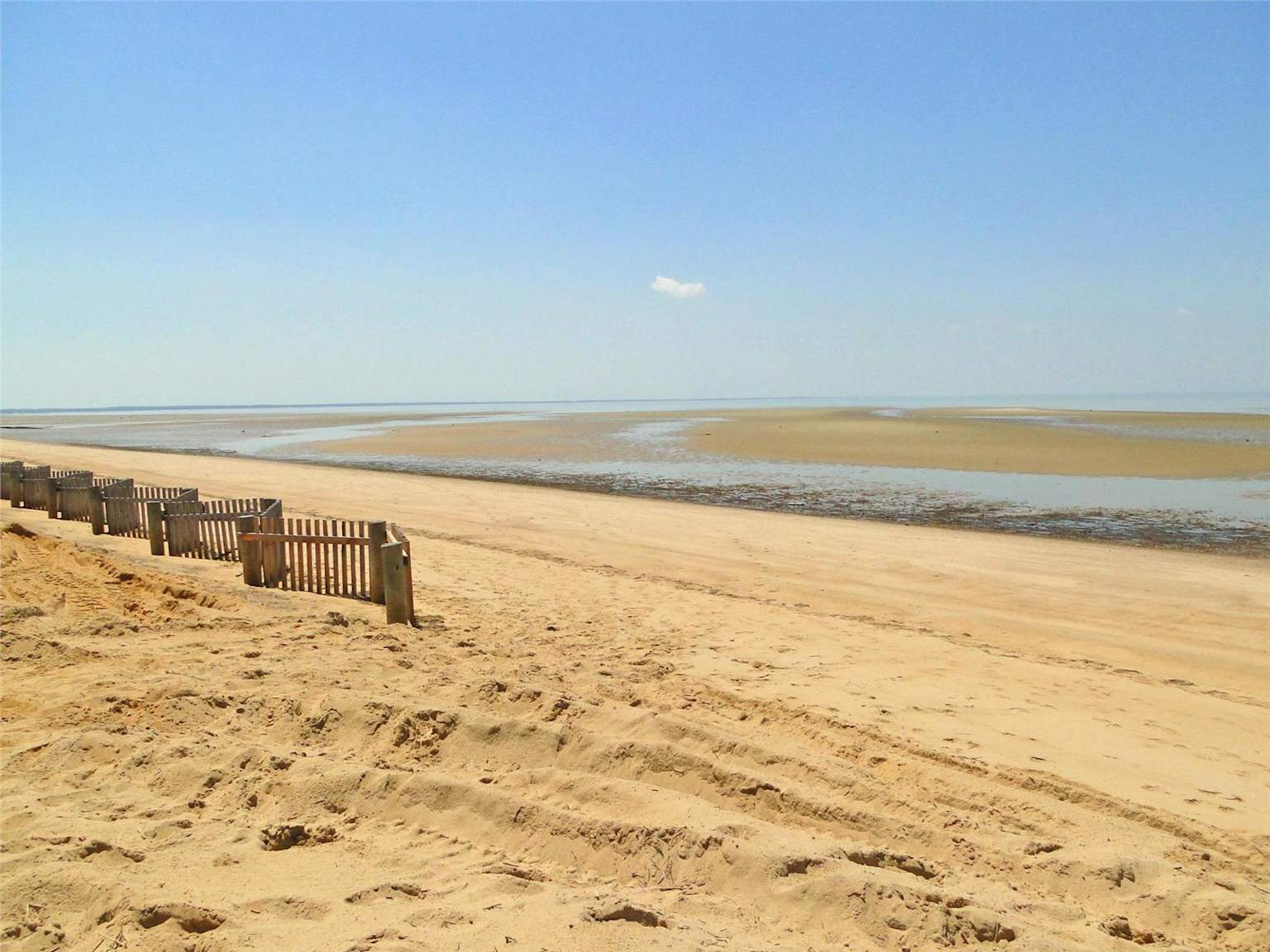
The west side of the Outer Cape faces Cape Cod Bay — and this is not the frigid, choppy Atlantic most people expect. The Bay is warm, calm, and shallow. The continental shelf here is nearly flat, the water reaching only 10–15 feet deep across vast stretches before the tide pulls back entirely. By mid-July, the Bay water temperature reaches 72–74°F — warmer than the Mediterranean manages most summers. The shallow tidal flats absorb heat all afternoon and release it as the tide returns, making the incoming water noticeably warmer than the open bay itself.
At low tide, beaches like Sunken Meadow extend hundreds of yards from the shore. Children can walk out forever and the water stays ankle-deep. Clamming is legal on the tidal flats — bring a bucket and a rake, check the town permit requirements, and you can harvest your dinner. The experience is closer to wading in a warm lake than ocean swimming, except that it is the Atlantic and the sky above it is enormous.
Sunken Meadow Beach, five minutes from CapeBarn's front door, is this beach.
The Atlantic Side
Eight minutes
the other way.
Eight minutes in the other direction, across the narrowest stretch of the Cape, is Coast Guard Beach. Cape Cod National Seashore. Ranked the number one beach in the United States by Dr. Beach in 1991 — a distinction it has effectively held ever since in the minds of everyone who has stood on it. Open Atlantic swells rolling in from the east. Dramatic dune cliffs, built up over centuries of storm and drift, dropping straight to the water. The horizon uninterrupted to Portugal, 3,000 miles away.
You have both within 15 minutes of each other: the warm, shallow, family-gentle Bay, and the wild open ocean. Almost no other address on the East Coast can say this. It is the defining geographic fact of staying in Eastham, and it is not obvious until you look at the map and realize how narrow the land is here.

Cape Cod Bay · Sunken Meadow Beach · Eastham, MA
The Town
Why
Eastham.
Among the Outer Cape towns, Eastham occupies a specific and useful position. Provincetown — 35 minutes north at the tip — is more famous, more vivid, and considerably more expensive and crowded in July. Wellfleet and Truro are beautiful but more remote from the services (grocery stores, pharmacies, hardware, equipment rental) that make a longer stay easy. Chatham is lovely but points back toward the more developed Lower Cape.
Eastham is the pivot point. It sits squarely inside the National Seashore boundary — meaning the landscape around it is federally protected and will not change. The commercial strip development that consumed the Lower Cape in the 1970s and 80s never reached here. What you see from the Salt Pond Visitor Center is what Thoreau saw, more or less, minus the electrical wires.
Practically, Eastham is 2 minutes from an access point to the Cape Cod Rail Trail — 25 miles of paved, flat, off-road cycling through some of the Cape's finest terrain. Sunken Meadow Beach is walkable. Coast Guard Beach is a short drive or a bike ride. Orleans, with its full range of shops and restaurants, is 12 minutes south. Provincetown is an easy day trip.
The sweet spot: wild enough to feel like the Cape, connected enough to feel easy.
40
miles
National Seashore
protected coastline
72°
Fahrenheit
Cape Cod Bay water
temperature in July
5
min walk
Sunken Meadow Beach
from CapeBarn
1849
Thoreau
Year he walked
these same dunes
250+
bird species
Recorded on
the Outer Cape
35
min north
Provincetown's
whale-watching fleet
Aesthetics
The
light.
There is a quality of light on the Outer Cape that painters have been trying to explain for more than a century. Part of it is atmospheric: the peninsula juts into the Atlantic, surrounded by water on three sides, and the salt air is unusually clear. Part of it is geographic: the land is flat enough that the sky dominates in a way it doesn't in most of New England, and light arrives from two directions — reflected off the Bay to the west and the open ocean to the east. At certain hours, particularly in the evening when the tide is out and the bay flats lie exposed and still, the water and the sky become the same colour and the horizon disappears. It is legitimately strange and beautiful.
The Provincetown art colony, established in the early 1900s, drew Charles Hawthorne, Hans Hofmann, and eventually hundreds of painters who came specifically for this quality of light. Edward Hopper spent summers in Truro, just up the road, and the particular emptiness and clarity of his late work owes something to these landscapes. The light in October — when the angle drops and the colors go amber and rose — is what turns September visitors into people who book again immediately for next year.
Seasons
When to
come.
June
First warm weeks. Quieter, cheaper.
Bay water reaches 65°F. Rail Trail open. Everything running, without the July crowds. The best value on the calendar for families who can travel before school ends.
July – August
Peak season. Water at 72°F+.
Book months ahead. Every restaurant full, every beach access parking lot gone by 9am. The Cape at its most alive — and its most demanding. Worth it if you plan accordingly.
September
The best-kept secret.
Water still warm. No crowds. Restaurants relaxed — chefs cooking for people who know food, not for families of eight with exhausted children. The Outer Cape shows its best self in September.
October
Fall light and the Wellfleet OysterFest.
Brisk, beautiful, and entirely yours. The OysterFest draws crowds for one weekend, but the rest of the month the Cape belongs to the people who know to come back after Labor Day.
Questions
Frequently asked
about the Outer Cape.
Is Cape Cod Bay warm enough to swim in?
Yes. By mid-July the Bay water temperature reaches 72–74°F at tidal beaches like Sunken Meadow — significantly warmer than the Atlantic side, which runs 5–8°F cooler. The shallow tidal flats heat up in the sun before the tide comes back in, making the water noticeably warmer than the deeper open bay. By late July, it is the warmest ocean swimming on the East Coast north of the Carolinas.
How is the Outer Cape different from the rest of Cape Cod?
The Outer Cape — Eastham, Wellfleet, Truro, Provincetown — sits inside Cape Cod National Seashore, established by JFK in 1961. Commercial development is prohibited on most of the outer coastline. What you find here looks much as it did 50 years ago — and before that, 150 years ago when Thoreau was walking these same dunes. The Lower Cape (Falmouth, Hyannis, Dennis) is a different animal: mini golf, strip development, heavy traffic on Route 28. The Outer Cape is why people fell in love with Cape Cod in the first place.
Can you really see whales?
Yes. The Stellwagen Bank National Marine Sanctuary, directly off Provincetown, is one of the world's best whale watching sites. Humpback, finback, and minke whales feed there from April through October. The Dolphin Fleet in Provincetown runs daily four-hour boats — naturalists aboard, high sighting rates. You can also occasionally spot whales and dolphins from Race Point Beach without leaving shore. It is not a gimmick — it is genuinely one of the great marine wildlife experiences on the East Coast.
What if the weather is bad?
The Outer Cape holds up well in poor weather. The Wellfleet Drive-In runs double features every night regardless of conditions. The Salt Pond Visitor Center has excellent free exhibits on Cape Cod geology and ecology. Wellfleet has more art galleries per capita than almost anywhere in New England — a rainy afternoon there is genuinely pleasant. Provincetown, 35 minutes north, has galleries, museums, and exceptional restaurants in any weather. A day of fog on the Outer Cape has its own particular beauty.
Five minutes from all of it.
Stay at
CapeBarn.
Two vacation rentals on 1460 Massasoit Road, Eastham — five minutes from Sunken Meadow, eight from Coast Guard Beach, two from the Rail Trail.
Instant booking on Airbnb · or browse The Barn & The Main House